
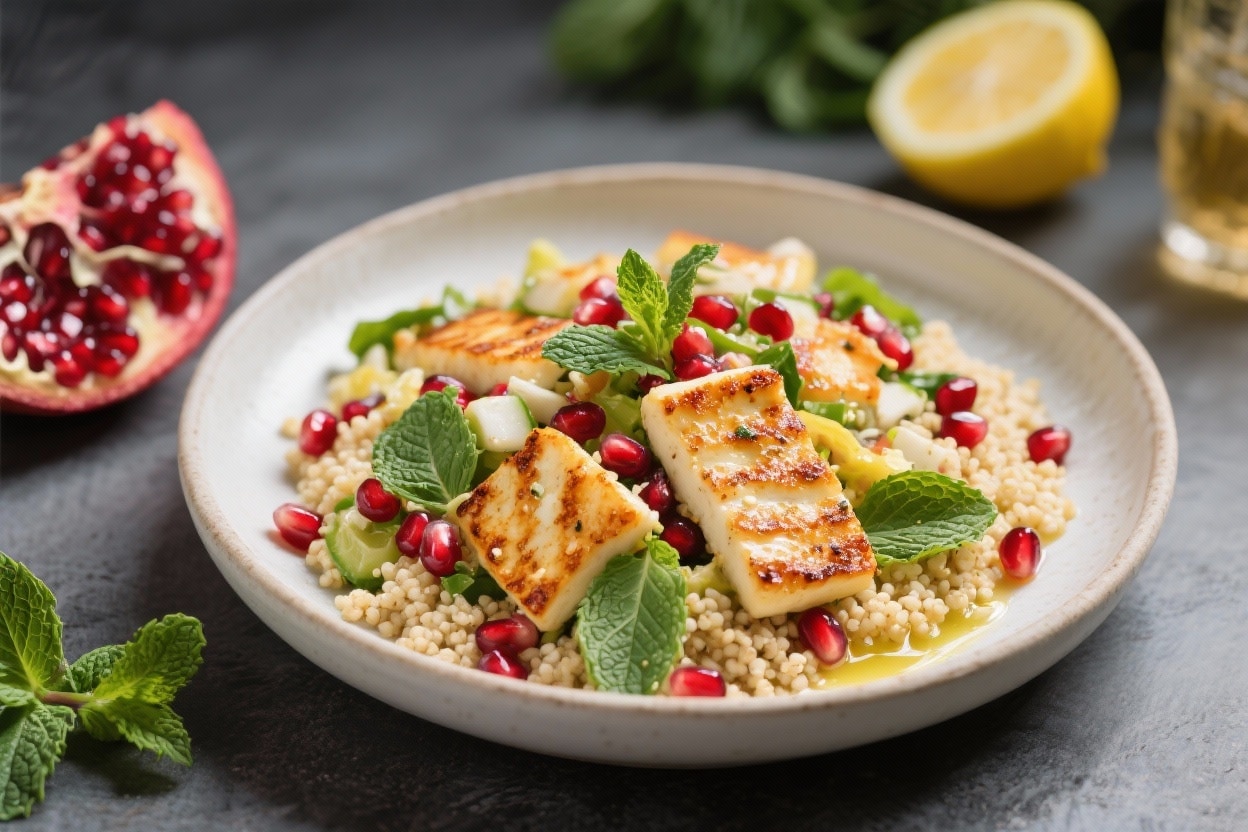
Crisp, golden halloumi, sweet pops of pomegranate, and fluffy couscous come together in a salad that’s both lively and comforting. The mint-lemon dressing is bright without being sharp, and it balances the salty cheese beautifully. This is the kind of dish you can throw together on a weeknight and still feel like you’re eating something special.
It works for lunch, dinner, or as a generous side for a gathering. Best of all, most of the prep is simple chopping and quick pan-frying.
What Makes This Recipe So Good
- Big flavors, simple steps: Halloumi brings salty, squeaky richness; pomegranate adds juicy sweetness; the mint-lemon dressing ties everything together.
- Texture you can’t ignore: Soft couscous, crunchy cucumber, toasty nuts, and crisp-edged halloumi make every bite interesting.
- Fast and flexible: Couscous cooks in minutes, and you can swap vegetables with what’s in your fridge.
- Great warm or at room temp: Serve it fresh off the stove or pack it for lunch. It holds up well.
- Looks impressive: The colors are vibrant—perfect for sharing at potlucks or picnics.
What You’ll Need
- For the salad:
- 1 cup couscous (instant or quick-cook)
- 1 cup vegetable stock or water
- 225–250 g halloumi, sliced into 1 cm slabs
- 1 cup pomegranate arils (seeds)
- 1 medium cucumber, diced
- 1 small red onion or 2–3 shallots, thinly sliced
- 1 red bell pepper, diced (optional but great for crunch)
- 1/3 cup fresh mint leaves, chopped
- 1/3 cup fresh parsley, chopped
- 1/4 cup toasted almonds or pistachios, roughly chopped
- 2 tbsp olive oil (for frying halloumi)
- Sea salt and black pepper, to taste
- For the mint-lemon dressing:
- 1/4 cup extra-virgin olive oil
- 1 large lemon, zested and juiced (about 3–4 tbsp juice)
- 1 small garlic clove, finely grated
- 1–2 tsp honey or maple syrup, to taste
- 2 tbsp finely chopped mint
- 1 tsp Dijon mustard
- Pinch of chili flakes (optional)
- Salt and pepper, to taste
How to Make It
- Make the couscous: Bring the stock or water to a boil.Pour over the couscous in a bowl, cover, and let sit for 5 minutes. Fluff with a fork and season with a pinch of salt and pepper.
- Prep the vegetables and herbs: Dice the cucumber and pepper, slice the onion, and chop the mint and parsley. Set aside the pomegranate arils and nuts.
- Mix the dressing: In a jar or small bowl, whisk the olive oil, lemon juice and zest, garlic, honey, Dijon, mint, chili flakes (if using), and a good pinch of salt and pepper.Taste and adjust for sweetness, salt, and acidity.
- Dress the couscous base: While the couscous is still slightly warm, drizzle over about half the dressing and toss. This helps the grains absorb flavor.
- Cook the halloumi: Pat the halloumi dry with paper towels. Heat 2 tbsp olive oil in a nonstick pan over medium-high heat.Fry the halloumi for 1–2 minutes per side until golden and crisp at the edges. Remove to a plate.
- Assemble the salad: Add cucumber, onion, pepper, parsley, and most of the mint to the couscous. Fold in the pomegranate arils and nuts, reserving a bit of each for garnish.Add more dressing to taste.
- Finish and serve: Top with warm halloumi. Sprinkle remaining pomegranate, nuts, and mint. Add a final squeeze of lemon and a crack of black pepper.Serve warm or at room temperature.
<center><iframe
src="https://mellifluous-elf-fe1371.netlify.app"
width="100%"
height="800px"
style="border: none; border-radius: 12px; box-shadow: 0 4px 6px -1px rgb(0 0 0 / 0.1), 0 2px 4px -2px rgb(0 0 0 / 0.1);"
title="Daily Calorie Calculator"
></iframe></center>
How to Store
- Without halloumi: The couscous salad (dressed) keeps in an airtight container in the fridge for up to 3 days. The flavors deepen by day two.
- Halloumi: Store cooked halloumi separately for up to 2 days. Re-crisp it in a hot, dry pan for 1–2 minutes per side before serving.
- Make-ahead tip: Keep the dressing in a jar and add just before serving to maintain the freshest texture.
Why This Is Good for You
- Balanced macros: Couscous brings carbohydrates for energy, halloumi offers protein and fat for satiety, and the vegetables add fiber and micronutrients.
- Antioxidant boost: Pomegranate is rich in polyphenols, which support heart health and fight oxidative stress.
- Fresh herbs for more than flavor: Mint and parsley add vitamin K and plant compounds that support digestion and overall wellness.
- Lemon and olive oil: A classic pair that supports healthy fats and bright flavor without heavy sauces.
What Not to Do
- Don’t skip drying the halloumi: Excess moisture prevents browning and leads to splattering.
- Don’t over-salt early: Halloumi is naturally salty.Season the couscous lightly and adjust at the end.
- Don’t drown the salad: Add dressing gradually. It should be glossy, not soggy.
- Don’t overcook the couscous: It only needs to steam. Boiling it on the stove can make it mushy.
- Don’t mix hot halloumi into a cold, wet bowl: The cheese can steam and lose its crisp edges.Add just before serving.
Variations You Can Try
- Grain swap: Use pearl couscous, quinoa, or bulgur. Adjust cooking times and liquids accordingly.
- Greens upgrade: Toss in arugula or baby spinach for extra freshness and volume.
- Citrus twist: Replace lemon with orange or add a splash of orange juice to the dressing for a sweeter note.
- Nuttier crunch: Try pistachios, walnuts, or pine nuts. Toast them lightly for deeper flavor.
- Spice it up: Add a pinch of ground cumin or sumac to the dressing.Both pair well with halloumi and mint.
- Make it vegan: Swap halloumi for crispy chickpeas or grilled tofu and use maple syrup in the dressing.
- Roasted veg version: Roast cherry tomatoes, zucchini, or carrots and fold them through for a cozy, warm salad.
FAQ
Can I use pearl couscous instead of regular couscous?
Yes. Cook pearl couscous on the stove like pasta until tender, then drain, rinse lightly, and toss with a bit of oil and some dressing while warm.
How do I stop halloumi from sticking to the pan?
Use a good nonstick pan, heat it well before adding the cheese, and don’t move the slices until they naturally release. A thin film of oil helps crisp the edges.
What can I substitute for pomegranate?
Diced mango, orange segments, or halved grapes work well.
You want something juicy and slightly sweet to balance the salty cheese.
Is this salad good for meal prep?
Yes, with one tweak. Store the halloumi and dressing separately, then re-crisp the halloumi and dress the salad just before eating.
Can I make it gluten-free?
Absolutely. Use quinoa or millet instead of couscous.
The rest of the ingredients are naturally gluten-free.
What’s the best way to seed a pomegranate?
Cut it in half, hold the cut side over a bowl, and whack the back firmly with a wooden spoon. Pull away any white pith that falls in.
Can I grill the halloumi instead of pan-frying?
Yes. Brush with a bit of oil and grill over medium-high heat for 1–2 minutes per side until char marks appear.
Why is my halloumi rubbery?
Halloumi is naturally firm, but overcooking can make it tough.
Aim for golden edges and a soft center—just a couple of minutes per side.
Final Thoughts
This Halloumi & Pomegranate Couscous Salad with Mint-Lemon Dressing is a small effort, big payoff kind of meal. It’s fresh, colorful, and satisfying without feeling heavy. Keep the components on hand and you’ve got a reliable go-to for busy nights, weekend lunches, and everything in between.
Once you make it, you’ll likely keep the dressing and method in your back pocket for endless variations. Simple, bright, and always welcome at the table.